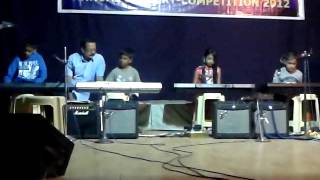
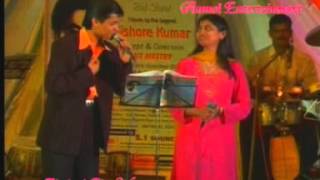
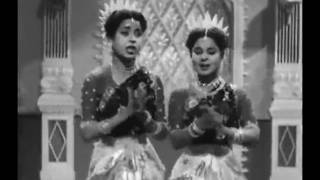
Surojit Guha and Sangeeta Melekar performing during our Best Of Hemant Kumar Show on 16th Aug 2013 at Tejpal Auditorium
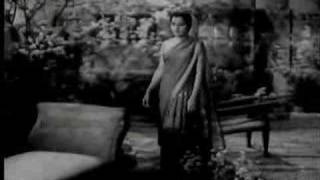
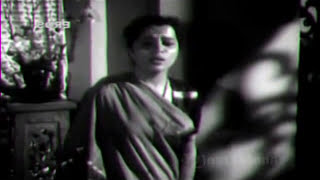
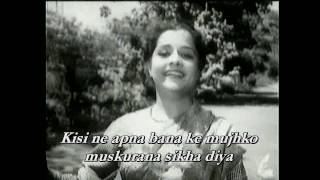
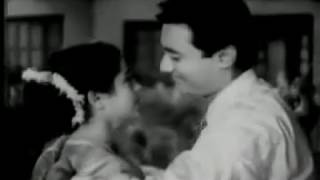
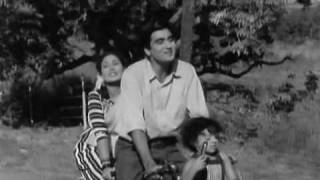
Song -Sawle salone Leke
Film - Ek Hi Rasta(1956)
Lyrics -Majrooh Sultanpuri
Music - Hemanth Kumar
Original singers: Hemanth Kumar-Lata Mangeshkar
Movie - Ek Hi Rasta - Sawle Salone Aaye Din Baharke - sung by ...
www.youtube.com/watch?v=C32BoIfYNhY
May 27, 2013 - Uploaded by Lathamusic2
Song -Sawle salone Leke Film - Ek Hi Rasta(1956) Lyrics -Majrooh ... Movie - Ek Hi Rasta - Sawle ...
www.hindilyrics.net/.../hindi-lyrics-of-Ek%20Hi%20Raasta%20(1956).ht...
Hindi lyrics of all songs of movie Ek Hi Raasta (1956)
film Ek Hi Raasta (1956)Sunil Dutt - Meena Kumari
Writers:
Mukhram Sharma (dialogue),
Mukhram Sharma (screenplay),
Storyline
Amar, Malti, and their young son, Raja, live a middle-class, but very
harmonious life. Both Amar and Malti were brought up in an orphanage,
and are always ready to help other orphans. Amar works for a
kind-hearted and generous employer named Prakash Mehta, who is envious
of their lifestyle, and would himself like to get married. Then one day
Amar intercepts some criminal activity, which results in two employees
losing their jobs, with one ending up in prison. When the prison term
gets over, he runs over Amar under his truck, killing him instantly.
Devastated and heart-broken, Malti hides this news from Raja and tells
him that Amar is hospitalized and unable to return home. Then the towns
folks start linking her with Prakash, leading to rumors being spread
about their intimacy, finally resulting in Prakash proposing to her and
both getting married. This settled, the two hope that life will continue
and wounds will heal. But Raja expects his dad to return home, starts
hating Prakash - ...
Written by
rAjOo (gunwanti@hotmail.com
myswar.com/album/ek-hi-raasta-1956
5+ items - Ek Hi Raasta (1956) by Hemant Kumar - Complete information ...
Chali Gori Pee Se Milan Ko
Hemant Kumar.
Saanwale Salone Aaye Din Bahaar Ke
Lata Mangeshkar, Hemant Kumar.
Ek Hi Raasta
Album Category: Hindi, Film
Year: 1956
Music Director: Hemant Kumar
Lyricist: Majrooh Sultanpuri
Label: Saregama
Credits: Assistant Music Director: Ravi Shankar Sharma
- See more at: http://myswar.com/album/ek-hi-raasta-1956#sthash.MEx3sj2c.dpuf
-
Ek hi Raasta 1956, cast:Sunil Dutt, Meena Kumari, Sawle salone aaye din bahar ke, singers : Lata Mangeshkar, Hemanth Kumar, ...
-
Song: Kaisee Laagi Kaisee Laagi Jaaye Toh Jaaye Jiya Cast: Kum Kum, (another unknown dancer?) Music: Hemant Kumar ...
-
=========================
Daisy Irani – Memories
We were five children. I was the fourth. My father owned an Irani
restaurant near Grant Road station and was doing very well. And I was
just two-and-a-half years old when I did my first movie.
I don’t remember how I got my first break because I was very small.
But they say that on the ground floor of our building lived this
director called Bipin Gupta. He was on the lookout for a small boy to
act in his movie. I was wearing my brother’s shirt and playing in the
building compound and he mistook me for a boy. So they approached my
mother to cast me in the movie. My dad was very strict. He was against
my joining movies. But my mother was adamant, and so I had no choice
but to join films. I signed my first film. Then others like Satyen Bose,
B.R. Chopra and others came forward and I was hot property. My first
release was
Taksal.
After I’d played a boy in films, they never let me become a girl. But
I enjoyed myself. I was never frightened by the camera or all the
attention. My co-stars were fantastic. Dada Moni, Balraj Sahni and
Nirupa Roy. Nirupa aunty used to always take care of me. I guess the
attachment was because we could relate better, as we were both females. I
always worked with big stars, so I had no complaints. Kids love
attention and I took all the attention beautifully. It never went to my
head.
I was told so many times never to look into the camera, never to
touch my face when makeup had been applied. So one day, I went up to
Dada Moni and told him, “Don’t look into the camera, and don’t touch
your face when your makeup is on!” He started giggling. I made him feel
as though it was his first day of shooting.
Slowly, I started becoming busy. I used to do three shifts. I
remember in those days we used to travel in huge cars, and since I was
so small, I used to stand up to see where we were heading. And because I
used to be so tired I used to go to sleep standing up! So people
started saying I was like Bhagwan Dada. Even he used to have this habit
of standing up and dozing off to sleep.
I used to enjoy myself on the sets playing pranks and being my
mischievous self. Everybody used to talk of me. Everyone would want to
carry me on their shoulders. The only thing I missed was my studies, and
a childhood with children of my own age. On the sets, I was always
thrust onto adults.
Suddenly the fun part disappeared, and the tiring part started. If
for a scene I was required to cry and I wouldn’t, they were not ready to
sacrifice their movie just because I was not in a mood to cry. So they
would pinch me, they would hit me, give me two or three slaps till I
cried. In those days most of the movies were tear jerkers and I was
required to cry in most of them. This became quite irritating.
I did
Hum Panchhi Ek Dal Ke in which we had Jagdeep, Mohan
Choti and it was great fun doing that movie. The movie got a National
Award and we were invited to Delhi for the awards function. We went to
meet Nehru chacha. He was very sweet and gave us presents. When we were
leaving, my mother asked me to go and thank him for all the trouble he
went through to make time for us. I went and made a mess of it. I went
and said, ‘Sorry for the trouble’. He was stunned. He called my mother
and asked her if I went to school. She said I didn’t because I was so
busy doing movies.
Nehru chacha gave me a letter to get me admission. But in spite of
that, no school was willing to take me on. I was nine years old by that
time and I was too big for standard one. Finally, one school gave me
admission, and I joined the fourth standard. And for three years I was
in the same class!
The other day I met Mukul Anand. He told me that he was in my class
in the fourth standard. I asked him which year and he was puzzled. Then I
explained to him that since I was in the same class for three years, I
wanted to know which year he was with me. He laughed! Actually I was
like a permanent fixture in the class!
After being three years in the same class I discontinued my studies.
Actually, even if I wanted to continue, I’m sure my teachers wouldn’t
have allowed me. I was too mischievous. My brothers helped me a lot in
learning English. They gave me comics to read and they would insist that
I speak to them only in English. That’s why today I can speak it
fluently.
Naya Daur days were fun. Since I was like a boy, I never had
a separate room. Ajit saab and Yusuf saab would fight over whom I slept
with. I would always chose Yusuf saab. But years later, after he had
got married to Saira, he really embarrassed me. He was introducing me
to Saira and said, ‘You know I used to sleep with this girl’. She was
taken aback. I didn’t know where to look. But he just never realised his
faux pas. When he finally did, he quickly said, ‘No, no, not like that!
I meant when she was a kid!’
Meena Kumari, Madhubala, Lalita Pawar; I always worked with the cream
of stars. I was very frightened of Lalita Pawar, because if she was in
the movie, then she would be playing the
souteli maa and would
have to hit me. One day we were shooting in Prabhat Studio where there
was a swimming pool. I loved to swim even though I didn’t know how. So I
just jumped in the pool. Lalitaji was sitting beside the pool and
reading her lines. She noticed that I was drowning and jumped in and
rescued me. Once we got out however, she gave me a good thrashing!
Meena Kumari was a very sensitive person. When she was required to
slap me in a shot, she would hesitate because she could see that I was
frightened. Every time she lifted her hand I would move back. So after
many retakes she held my hand and promised me that she would not hurt
me. When the shot was taken she hit me. I was shocked and hurt. After
the shot she hugged me and asked for my forgiveness. She thought I would
never trust her again.
I also remember that she had a very costly carpet in her house. One
day, Tajdar, her step son, and I together poured sugar all over it, I
don’t remember for what, probably for the ants to eat. In those days
there were no vacuum cleaners, so the whole thing was a big mess. But
she just couldn’t get angry with us.
During the shooting of
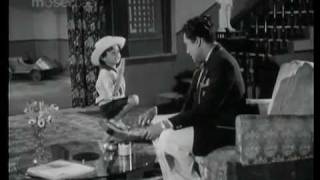
Ek Hi Raasta there was this scene I
had to do. It had to be shot at a particular time when a train passed
by. Suddenly, I developed a taste for a certain fruit and I decided that
if I didn’t get the fruit, I wouldn’t shoot. They were tearing their
hair in frustration, but I was adamant. In the end I got my way. That
was the only time I recall throwing a tantrum. Otherwise, till today,
people come and praise me for being very professional. It was my sister
Honey who was very troublesome. She would demand grapes, 12
rasgullas and all that…
Suddenly I grew up and the offers stopped coming. I reached this
funny age when nobody likes you. The attitude of people started
changing. No longer did people pamper me. Before, during Diwali, I
used to be flooded with sweets and crackers. All this stopped. This was
when I realised I was going down. I was in a way glad because I was very
tired of going three shifts. I started doing stage shows. Then my
mother made a movie called
Bachpan and launched my elder sister
opposite Salim Khan – Salman’s dad. The movie flopped and my mother was
heavily in debt. We used to have seven cars and suddenly everything
started getting sold. I could feel the pressure on the family. To top
it all, my roles stopped coming. I was entering puberty. People could
make out that I was a girl. They would tie a cloth on my chest so no one
could make out the difference. It was all very silly and idiotic.
Mentally I was never set to become a heroine. But again my mother
who was very keen pushed me into it. I started doing Gujarati and
Punjabi movies. I started looking out for lead roles in Hindi films.
Those who I worked with as a child artiste, were not willing to give me a
break. Today, when I look back, I realise that it’s because I wouldn’t
fit into these roles. But at that time it was all very frustrating. I
became rebellious. I started smoking and back answering people. I became
very rowdy. I remember when I was shooting at Ranjit Studio for
Pehchan,
some lightmen whom I knew from childhood came upto me and said, ‘Do
whatever you want, but don’t smoke in front of us’. From that day I
never smoked on that set. But because my career was not taking off, I
was kind of angry at the whole system.
There were some producers who were not at all sensitive to my
feelings. They would say, ‘beti beti’ and touch me all over. I then went
to people I knew, and they would say I was too small, which frankly, I
was. My mother wanted to make me a heroine when I was 14 years also. It
was very silly on my mother’s part. A child cannot give her lover a look
or play a woman at that age. My mother also had this very conservative
attitude ‘You cannot look at any boys, you can’t talk to anyone.’. Yet
at the same time, she wouldn’t mind me doing love scenes. In the acting
classes I run today, I had a student whose mother was like that. I
called her mother up and told her, ‘If you are so strict then don’t put
her in this profession’. I told her that even I had been through such a
phase. One must make up their mind about what they want from their
children. Whether you want them to study or earn. It’s not like
yeh bhi karo our woh bhi karo!
My mother was always after money! She had developed a lifestyle and
she wanted to maintain it. To be known as the mother of a heroine was a
big thing. And you know most of our heroines have this mama problems –
uneducated mothers tagging along, for shootings, interfering in
everything, eating the producer’s head for every small thing. Thank God
for Zeenat Aman’s mother, who was so liberated that she changed the
whole scenario.
My father on the other hand never took a penny from my earnings till
the day he died! His restaurant was doing very well, and he always
looked after my needs.
I was to do a dance sequence in a movie to be directed by K.K.
Shukla. When we met, we fell in love and decided to get married. Around
this time, I was offered a lead role in a movie called
Tarzan Ki Beti
or something like that. For me, at that time, it was a big movie. I had
to choose between the film and my marriage. Luckily, I chose the
latter. There was big crisis in my family. My mother was very upset, so
our plan was to run away and get married. But my father intervened and
said that if I wanted to get married, I should get married like a decent
girl. We were Parsis and my husband was a Hindu, so we got married at
the Arya Samaj.
I settled down as a housewife. I have three children. But sitting at
home doing nothing, got me really bored. So I started moving around. I
got to see some acting classes. That’s when I realised how bad these
classes were, and that students actually learned nothing from them. They
only paid exorbitant entry fees. So I decided to start my own class. I
opened my class in 1990 and now it’s doing very well. My students like
Farheen and Ayub have just got noticed. And I am sure that there are
better things to come…
I have not seen all my movies, but of the ones I have, I liked
Bandish and
Ek Hi Raasta.
All my old films were gutted in the fire that took place at the lab at
Tardeo. But now I am trying to get as many prints as I can get my hands
on. Sometimes when I meet my fans, they name movies that even I didn’t
know about. I just nod my head and say yes. Today however, I am very
content with my work. It keeps me busy and gives me a chance to guide
these newcomers, which is all so satisfying. (
As told to Vijay in 1992)
Daisy Irani (actress)
From Wikipedia, the free encyclopedia
| Daisy Irani |
Irani in 2012
|
| Born |
1950 |
| Occupation |
Actor |
| Spouse(s) |
late K.K. Shukla (1971–present) |
Daisy Irani (born 1952) is a famous former
Bollywood and
Kollywood child artiste in the 1950s and 1960s. Born into a
Zoroastrian family, she is the sister of writer director
Honey Irani.
During the Golden Age (1950s 70s) of Hindi cinema some child stars
had great visibility. The Irani sisters Daisy Irani and Honey Irani, who
generally played cute boys with curly hair, became household names
[1]and some of their films fetched the biggest openings. The Irani sisters, Daisy and
Honey,
became household names: The films that had both fetched the biggest
openings. Stories were re-written to include them in the cast or
increase their footage in the films, and they were prominently
publicized in the promos of their movies. Their most-remembered movies,
together or separate, include
Bandish,
Jagte Raho,
Bhai Bhai,
Naya Daur,
Hum Panchi Ek Dal Ke,
Musafir,
Sahara,
Quedi No. 9211,
Duniya Na Mane,
Do Ustad,
Dhool Ka Phool,
Soorat Aur Seerat and
Chandi Ki Diwar.
Daisy Irani, who was more popular than her younger sister as a child
artiste, continued to act after growing up, though not in any
significant roles.
Personal life
She married movie Writer K.K. Shukla (on January 21, 1971 at age 19)
and has three children: Kabir, Varsha and Ritu. She is maternal aunt to
Farhan and
Zoya Akhtar (son and daughter of her sister
Honey Irani) and
Sajid and
Farah Khan (son and daughter of sister Menaka).
Irani was a heavy smoker of cigarettes. One report claims that she gave up smoking after she became a Christian.
She is a member of New Life Fellowship Mumbai.
=========================
Meena Kumari
From Wikipedia, the free encyclopedia
| Meena Kumari |
Meena Kumari
|
| Born |
Mahjabeen Bano
1 August 1932
Mumbai, Maharashtra |
| Died |
31 March 1972 (aged 39)
Mumbai, Maharashtra, India |
| Occupation |
Actress |
| Years active |
1939–1972 |
Meena Kumari (1 August 1932 – 31 March 1972), born
Mahjabeen Bano,
was an Indian movie actress and poetess. She is regarded as one of the
most prominent actresses to have appeared on the screens of
Hindi Cinema.
During a career spanning 30 years from her childhood to her death, she
starred in more than ninety films, many of which have achieved classic
and cult status today. With her contemporaries
Nargis and
Madhubala she is regarded as one of the most influential
Hindi movie actresses of all time.
Kumari gained a reputation for playing grief-stricken and tragic
roles, and her performances have been praised and reminisced throughout
the years. Like one of her best-known roles, Chhoti Bahu, in
Sahib Bibi Aur Ghulam
(1962), Kumari became addicted to alcohol. Her life and prosperous
career were marred by heavy drinking, troubled relationships, an ensuing
deteriorating health, and her death from
liver cirrhosis in 1972.
Kumari is often cited by media and literary sources as "The Tragedy
Queen", both for her frequent portrayal of sorrowful and dramatic roles
in her films and her real-life story.
Early life
Meena Kumari was the third daughter of Ali Baksh and Iqbal Begum;
Khursheed
and Madhu were her two elder sisters. At the time of her birth, her
parents were unable to pay the fees of Dr. Gadre, who had delivered her,
so her father left her at a
Muslim orphanage, however, he picked her up after a few hours.
Her father, a
Shia Muslim, was a veteran of
Parsi theater, played harmonium, taught music, and wrote
Urdu poetry. He played small roles in films like
Id Ka Chand and composed music for films like
Shahi Lutere.
Her mother was the second wife of
Ali Baksh.
Before meeting and then marrying Ali Baksh, she was a stage actress and
dancer, under the stage name, Kamini and earlier in her life related to
the well known
Tagore family of
Bengal.
Career
Early work
When Mahjabeen was born, Ali Bakhsh aspired to get roles as an actor
in Rooptara Studios. At the urging of his wife, he got Mahjabeen too
into movies despite her protestations of wanting to go to school. Young
Mahjabeen is said to have said, "I do not want to work in movies; I want
to go to school, and learn like other children."
As Mahjabeen embarked on her acting career at the age of 7, she was renamed Baby Meena.
Farzand-e-Watan or
Leatherface
(1939) was her first movie, which was directed for Prakash Studios by
Vijay Bhatt. She became practically the sole breadwinner of her family
during the 1940s. Her early adult acting, under the name Meena Kumari,
was mainly in mythological movies like
Veer Ghatotkach (1949),
Shri Ganesh Mahima (1950), and fantasy movies like
Alladin and The Wonderful Lamp (1952).
Breakthrough
Meena Kumari gained fame with her role as a heroine in Vijay Bhatt's
Baiju Bawra
(1952). This heroine always negated herself for the material and
spiritual advancement of the man she loved and was even willing to
annihilate herself to provide him the experience of pain so that his
music would be enriched. She became the first actress to win the
Filmfare Best Actress Award in 1953 for this performance.
Meena Kumari highly successfully played the roles of a suffering woman in
Parineeta (1953),
Daera (1953),
Ek Hi Raasta (1956),
Sharda (1957), and
Dil Apna Aur Preet Parayi (1960). Though she cultivated the image of a tragedienne, she also performed commendably in a few light-hearted movies like
Azaad (1955),
Miss Mary (1957),
Shararat (1959), and
Kohinoor (1960).
One of her best-known roles was in
Sahib Bibi Aur Ghulam (1962), which was produced by
Guru Dutt.
Kumari played Chhoti Bahu, an alcoholic wife. The film was a major
critical and commercial success, which was attributed by critics to
Kumari's performance, which is regarded as one of the best performances
of Hindi Cinema.
[3]
The role was famous for its uncanny similarity to Meena Kumari's own
life. At that time, she herself was on a road to gradual ruin in her own
personal life. Like her character, she began to drink heavily, though
she carried on. In 1962, she made history by getting all the three
nominations for
Filmfare Best Actress Award, for her roles in
Aarti,
Main Chup Rahungi, and
Sahib Bibi Aur Ghulam. She won the award for
Sahib Bibi Aur Ghulam.
Upperstall.com wrote about her performance,
"While each of the performances are spot on, if there is one person
who is the heart and soul of the film, it is Meena Kumari. Her portrayal
of Chhoti Bahu is perhaps the greatest performance ever seen on the
Indian Screen. The sequence where Chhoti Bahu dresses for her husband
singing Piya Aiso Jiya Main is a poignant exploration of a
woman's expectations and sexual desire, and later on when she has become
a desperate alcoholic, you cannot help but cry with her in the sequence
where she pleads with her husband to stay with her and then angrily
turns on him to tell him how she has prostituted her basic values and
morals to please him. However the common factors between the actress's
life and Chhoti Bahu are too dramatic to be merely coincidental - The
estranged marital relationship, the taking of alcohol, turning towards
younger male company, the craving to be understood and loved - all
elements evident in Meena Kumari's own life."
Later work
For four more years, Kumari performed successfully in
Dil Ek Mandir (1963),
Kaajal (1965), and
Phool Aur Patthar (1966), all of which earned her
Filmfare nominations, with
Kaajal
garnering her a fourth and last win of the Best Actress award. However,
after divorcing her husband in 1964, her addiction to alcohol became
stronger, and she often dulled her senses with liquor. She also relied
more and more on intimate relationships with younger men like
Dharmendra. Her subsequent releases, including
Chandan Ka Palna and
Majhli Didi did not do well.
Kumari's heavy drinking had badly damaged her liver, and in 1968 she fell seriously ill.
[1][5]
She was taken to London and Switzerland for treatment. Back home, she
started settling her debts and made peace with her estranged sister,
Madhu, whom she had not spoken to for two years.
[5]
Because of her heavy drinking, she increasingly lost her good looks,
and when she returned, she began playing character roles in movies like
Jawab (1970) and
Dushmun (1972).
[1]
She developed an attachment to writer-lyricist
Gulzar and acted in his directorial debut
Mere Apne
(1971). Kumari presented an acclaimed portrayal of an elderly woman who
got caught between two street gangs of frustrated, unemployed youth and
was killed, her death making the youth realise the futility of
violence.
Pakeezah, starring Kumari and directed by her ex-husband
Kamal Amrohi,
took 14 years to reach the silver screen. First planned by Amrohi in
1958, the film went on the studio floors in 1964, but the shooting came
to a standstill after their separation in March 1964, when it was more
than halfway complete.
[5] In 1969,
Sunil Dutt and
Nargis previewed some reels of the shelved film and convinced the estranged Amrohi and Kumari to complete it.
[1] Hindustan Times described the meeting which Dutt had organised between the two:
"Not much was said, but streams of tears were shed... Amrohi greeted
her with a token payment of a gold guinea and the promise that he’d make
her look as beautiful as the day she had started the film."[5]
Gravelly ill, Kumari was determined to complete the film and, well
aware of the limited time left for her to live, went out of her way to
complete it at the earliest. Despite her rapidly deteriorating health,
she gave the finishing touches to her performance. Initially, after its
release in February 1972,
Pakeezah opened to a lukewarm response
from the public; however, after Meena Kumari's death less than two
months later, people flocked to see it, making it a major box-office
success. The film has since gained a cult and classic status, and
Kumari's performance as a golden-hearted Lucknow prostitute drew major
praise. She posthumously received her twelfth and last Filmfare
nomination.
Throughout her life, Kumari had a love-hate relationship with movies,
and besides being a top-notch actress, she was a talented poetess, and
recorded a disc of her Urdu poems,
I write, I recite with music by
Khayyam.
Death
Three weeks after the release of
Pakeezah, Meena Kumari became seriously ill, and died on 31 March 1972 of
liver cirrhosis.
At her death, she was in more or less the same financial circumstance
as her parents at the time of her birth: It is said that when she died
in a nursing home, there was no money to pay her hospital bills. She was
buried at Rahematabad Qabristan located at Narialwadi, Mazgaon, Mumbai.
Relationship with Kamal Amrohi
In 1952, on the sets of one of her films, Meena Kumari fell in love with and married film director,
Kamal Amrohi, who was fifteen years elder than her and was already married. She wrote about Amrohi:
"Dil saa jab saathi paya
Bechaini bhi woh saath le aaya"
(When I found someone like my heart
He also brought sorrow with him)
Soon after marriage,
Kamal Amrohi and Meena Kumari produced a film called
Daera (1953), which was based on their love story. They also planned another film,
Pakeezah. However, it took sixteen years (1956 to 1972) before
Pakeezah reached the silver screen. (The scenes in
Pakeezah's popular song,
Inhi logon ne, were originally filmed in black and white, and were later reshot in color.)
It is said that Amrohi did not want children with Meena Kumari
because she was not a Syed. They raised Kamal Amrohi's son, Tajdaar, who
was greatly attached to his
chhoti ammi (younger mother).
Due to their strong personalities, however, Meena Kumari and Kamal
Amrohi started to develop conflicts, both professionally and in their
married life. Their conflicts led to separation in 1960, and ultimately
divorce in 1964. Highly affected Meena Kumari, who, once a happy woman,
became depressed and found solace in heavy drinking. They remarried, but
Meena Kumari had become an alcoholic by then.
She expressed her sorrows prominently in her poetry. About Kamal Amrohi she wrote:
"Tum kya karo ge sun kar mujh se meri kahani
Bay lutf zindagi ke qissay hain pheekay pheekay"
(Why do you want to listen to my story:
Colourless tales of a joyless life)
At the time of the divorce, she wrote:
"Talaaq to day rahay ho Nazar-e-qehar ke saath
Jawani bhi meri lauta do Mehar ke saath"
(You are divorcing me with rage in your eyes
Return to me, also, my youth along with the alimony!)
=================================
Sunil Dutt
Birth Name: Balraj Dutt
Date of Birth: 6 June 1930
Birth Place: Jhelum
Death: 25 May 2005
Death Place: Bandra, Mumbai
Address: 58 Smt. Nargis Dutt Road, Pali Hill, Bandra, Mumbai 400 050
Wife: Nargis
Son(s): Sanjay Datta
Daughter(s): Priya Dutt, Namrata Dutt
Zodiac Sign: Gemini
Debut Film: Railway Platform
Sunil Dutt was born on 6th June 1930 in Jhelam which is in British
India (now it is called as Pakistan). At the 1947 when partition of
India was happened, his whole family shifted to India and they lived in
one small village in Haryana district. Then he shifted to Mumbai and
admitted into Jai Hind College and then joins one job.
Sunil starts his career by doing job in radio. In the South Asia,
he was a famous announcer of Radio Ceylon. From the radio he moved
towards acting. His first film in the Bollywood was "Railway Platform"
which was released in 1955. In the year 1957, he did the film "Mother
India" with Nargis for the first time. In this film he performed role of
son of Nargis. At the time of shooting of this film, fire accident was
occured on the set. Sunil saved to Nargis from this accident and from
that both of them in love.
Sunil Dutt then got married with Nargis. They had one son and two
daughters named as Sanjay Dutt, Priya Dutt and Namrata Dutt. Sunil Dutt
was famous actor during 1960s. He gives many hit films such as Sadhana
released in 1958, Sujaata in1959, Mujhe Jine Do in 963 and Padosan
released in 1967. His role from Padosan film was much hit.
From the acting he turned towards production. His first film as a
producer was "Man Ka Meet" which was released in 1964 and first film as
director, producer and actor was "Reshma Aur Shera" released in 1971.
This was a big budget film but failure on box office. From that failure,
he back into acting only and gave the films such as Pran Jaye Par
Vachan Na Jaye released in 1974, Nagin in 1976 and Jani Dushaman in
1979.
In the year 1981, he launched to Sanjay Dutt through the film
"Rocky". After release of the film, Nargis was died because of the
pancreatic cancer. Sunil starts "Nargis Dutt foundation" for cancer
patients in memory of Nargis.
His political career was started from year 1982. He assigned as
"Sheriff of Mumbai" and this position was given by government of
Maharashtra. He then performed character roles in the films Paramparaa
released in 1992 and film Kshtriya in 1993. After that he took the break
from acting and moved towards politics
His comeback into the acting with film "Munna Bhai M.B.B.S"
released in 2003. In this film he played a role of father of Sanjay
Dutt. But this was his last film. He died in the year 2005 because of
heart attack in his home, Bandra. After his death, his daughter Priya
Dutt was member of the Parliament.
Sunil Dutt - Awards:
- 1963 - Filmfare Award for Best Actor (Mujhe Jeene Do)
- 1965 - Filmfare Award for Best Actor (Khandaan)
- 1967 - BFJ Award for Best Actor (Milan)
- 1995 - Filmfare Award for Lifetime Achievement
- 1998 - Star Screen Award for Lifetime Achievement
- 2001 - Zee Cine Lifetime Achievement Award
- Sunil Datta awarded with Padma Shri
Sunil Dutt - Selected Filmography:
- 1955 - Railway Platform
- 1956 - Ek hi Raasta
- 1957 - Mother India
- 1958 - Sadhana
- 1959 - Insaan Jaag Utha
- 1959 - Sujata
- 1960 - Ek Phool Char Kaante
- 1960 - Hum Hindustaani
- 1960 - Usne Kaha Tha
- 1961 - Chhaya
- 1962 - Main Chup Rahoongi
- 1963 - Gumrah
- 1963 - Mujhe Jeene Do
- 1963 - Yeh Raastein Hain Pyaar ke
- 1964 - Ghazal
- 1964 - Yaadein
- 1965 - Khandaan
- 1965 - Waqt
- 1966 - Amrapali
- 1966 - Gaban
- 1966 - Mera Saaya
- 1967 - Humraaz
- 1967 - Mehrbaan
- 1967 - Milan
- 1968 - Padosan
- 1969 - Chiraag
- 1969 - Pyaasi Shyam
- 1971 - Reshma aur Shera
- 1972 - Zindagi Zindagi
- 1973 - Heera
- 1974 - Chhattis Ghante
- 1975 - Zakhmee
- 1976 - Nagin
- 1976 - Nehle pe Dehla
- 1980 - Shaan
- 1982 - Dard ka Rishta
- 1985 - Faasle
- 2003 - Munnabhai MBBS
cycle songs collected